Shopify's built-in inventory tools are a good starting point. They track stock, show low-stock alerts, and handle basic product management. But once your catalog grows, or you start selling across multiple channels, the gaps become clear.
Shopify retired Stocky in February 2026 and shut it down completely in August 2026. That leaves a real hole for merchants who depended on it for purchase orders and reorder suggestions. The Shopify App Store has strong alternatives, and this guide covers the ten best ones available right now.
Whether you need spreadsheet sync, AI forecasting, supplier feed automation, or full warehouse management, there is an app on this list that fits your setup. Here is what each one does, who it is for, and what it costs.
What to Look for in a Shopify Inventory Management App
Not all inventory apps are built the same. Before you install anything, check these five things:
- Real-time sync. Does it update stock the moment a sale happens? Delays cause overselling and unhappy customers.
- Multi-location support. If you stock products across more than one warehouse or retail location, this is a must.
- Channel coverage. Selling on Amazon, Etsy, or eBay alongside Shopify? Confirm the app handles every channel you use.
- Forecasting and replenishment. Does the app tell you when to reorder, or do you still track that manually?
- Pricing transparency. Some apps hide the real cost behind add-on modules. Look for clear per-plan pricing before you commit.
Quick Comparison: Best Inventory Management & Sync Apps for Shopify
| App | Best For | Free Plan | Starting Price | Rating |
|---|---|---|---|---|
| FlexSync | Spreadsheet-based sync | Yes | Free | 4.7/5 |
| syncX Stock Sync | Supplier feed syncing | Yes | $5/month | 4.7/5 |
| Prediko | AI demand forecasting | No | $49/month | 4.9/5 |
| Sumtracker | Multi-channel sync | No | $49/month | 4.9/5 |
| Trunk | Bundle and variant sync | Yes | $35/month | 4.8/5 |
| Katana | Manufacturing and BOM | No | $199/month | 4.7/5 |
| Inventory Planner | High-volume forecasting | No | $245/month | 4.6/5 |
| SKULabs | Warehouse and barcode ops | No | $299/month | 4.8/5 |
| Cin7 Core | Enterprise multi-channel | No | $349/month | 4.3/5 |
| Linnworks | Large-scale multi-channel | No | $449/month | 4.2/5 |
1. FlexSync — Best Overall for Shopify Inventory Management
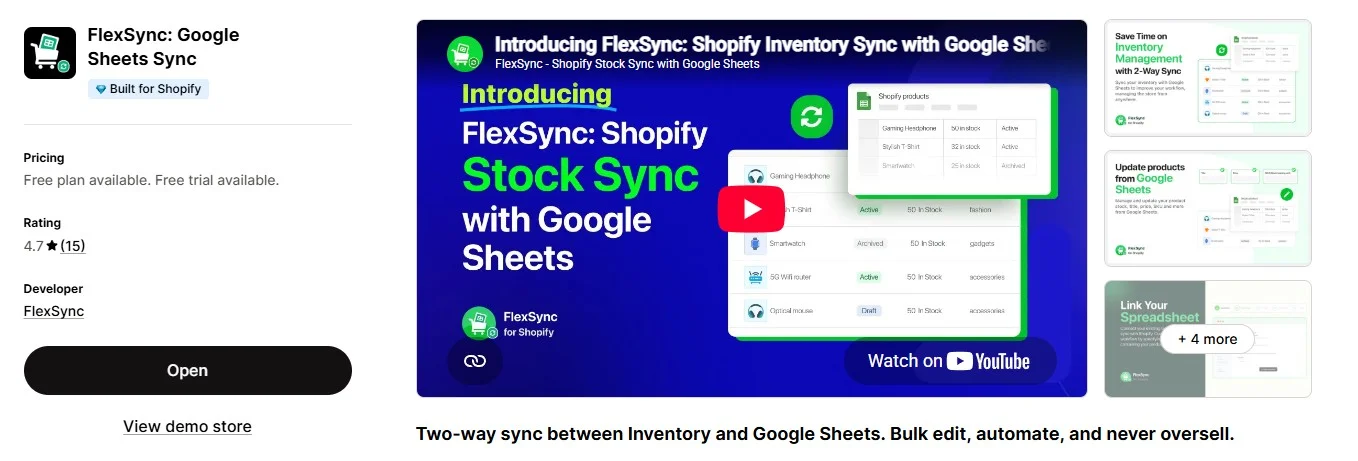
Rating: 4.7 / 5 Free plan: Yes From: Free Best for: Merchants who manage inventory in Google Sheets
FlexSync is the easiest way to connect your Shopify store to Google Sheets. It creates a two-way sync between your store and a spreadsheet. Changes you make in the sheet update your store. Sales in Shopify update the sheet. There is no manual exporting or importing involved.
Most Shopify merchants already know how to use spreadsheets. FlexSync meets them in that workflow instead of forcing them to learn a new dashboard. Bulk edits that would take hours in Shopify admin take minutes in a sheet.
It also handles multi-location inventory, so stock at different warehouse locations stays accurate without any extra setup. The free plan is a solid starting point. Larger catalogs and more advanced features are available on paid plans.
Key features:
- Two-way Shopify to Google Sheets sync
- Bulk edits to prices, stock, and product data directly from Sheets
- Multi-location inventory tracking
- Real-time updates on every sale and restock
- No coding or technical setup required
2. syncX Stock Sync — Best for Supplier Feed Syncing
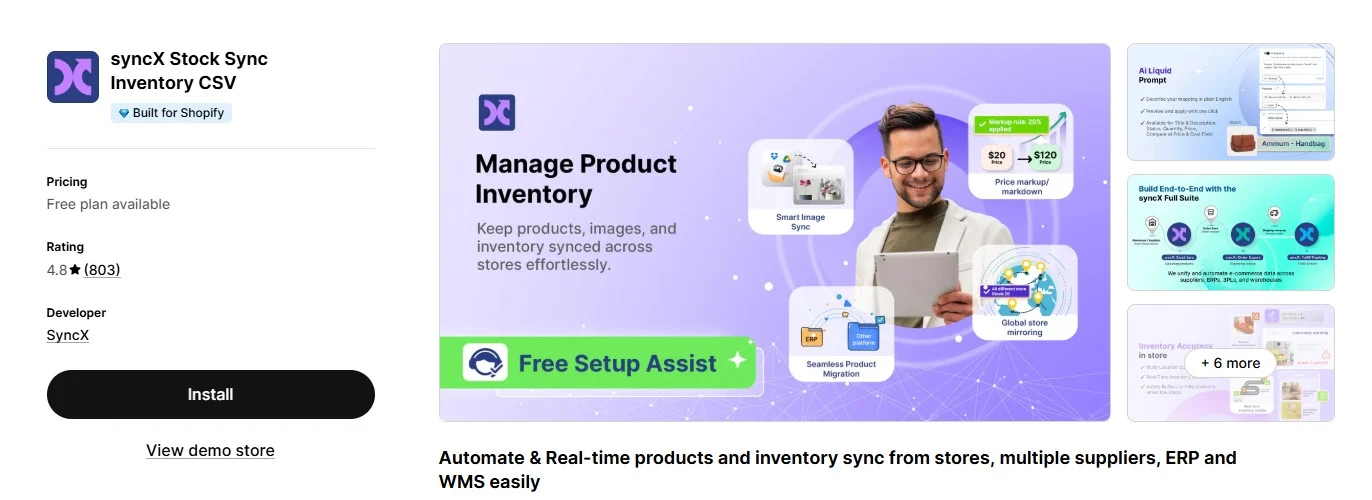
Rating: 4.7 / 5 Free plan: Yes (limited) From: $5 / month Best for: Dropshippers and multi-supplier stores
syncX Stock Sync connects your Shopify store to supplier feeds in CSV, XML, JSON, and a dozen other formats. It pulls in product data, prices, and stock levels on a schedule you define.
This is the right tool if you work with dropship suppliers or wholesalers who each send their own feed format. You configure the sync rules once, and syncX handles the updates automatically.
Key features:
- Supports CSV, XML, JSON, FTP, Google Sheets, Dropbox, and more
- Scheduled automatic sync, from hourly to daily
- Price markup rules and currency conversion
- Multi-supplier management from one dashboard
- Bulk product import and update
3. Prediko — Best for AI Demand Forecasting
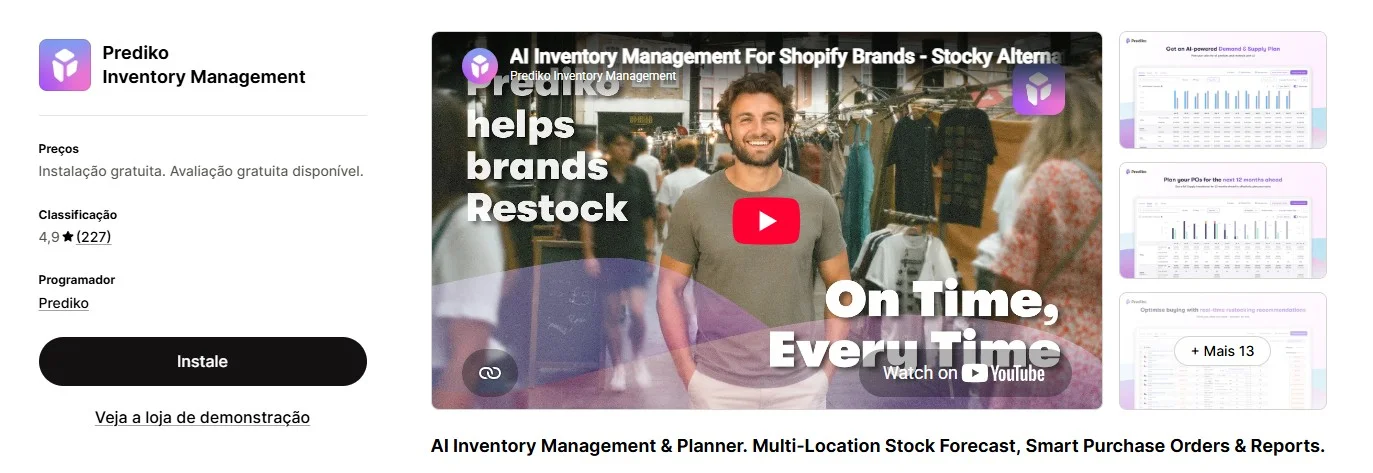
Rating: 4.9 / 5 Free plan: No (14-day trial) From: $49 / month Best for: DTC brands with fast-moving or seasonal SKUs
Prediko uses your Shopify sales history to predict future demand. It flags items running low, generates reorder suggestions, and lets you create purchase orders in one click. You stop relying on gut feel for restocking decisions.
It fits DTC brands well, especially those with seasonal products where getting the reorder timing wrong is expensive. The AI gets more accurate as it builds up more of your sales history.
Key features:
- AI-powered demand forecasting based on your sales history
- One-click purchase order creation
- Stockout and overstock alerts
- Sales and inventory analytics dashboard
- Native Shopify integration, no middleware needed
4. Sumtracker — Best for Multi-Channel Inventory Sync
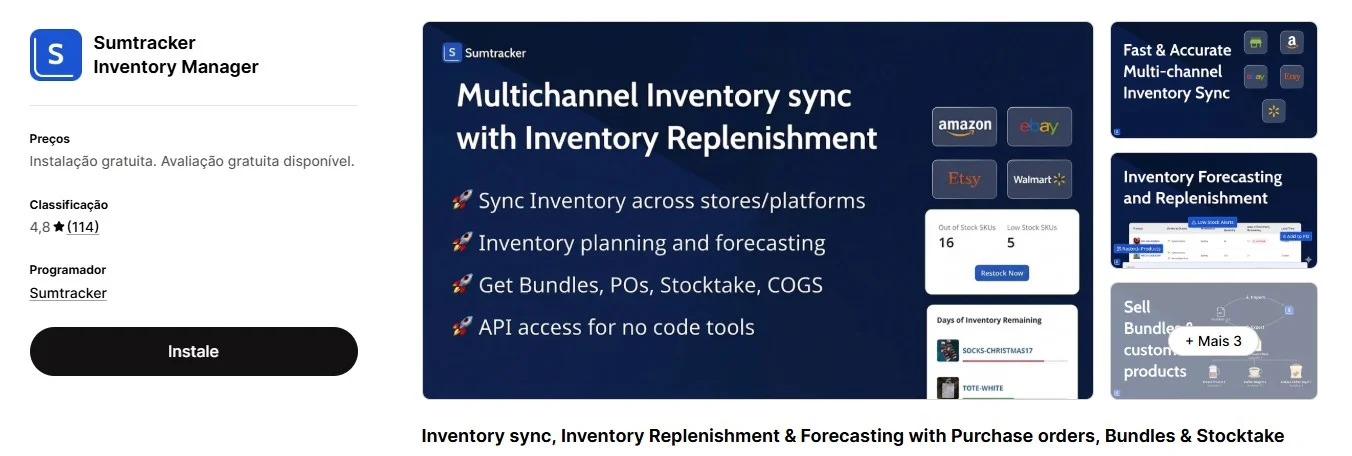
Rating: 4.9 / 5 Free plan: No (14-day trial) From: $49 / month Best for: Sellers on Shopify plus Amazon, Etsy, or eBay
Sumtracker keeps inventory in sync across Shopify and other sales channels in real time. When a product sells on Amazon, your Shopify stock drops automatically. When you restock, every channel updates together.
It also handles bundle tracking, which many sync tools skip. If you sell a product both standalone and as part of a kit, Sumtracker tracks the shared inventory correctly.
Key features:
- Real-time multi-channel stock sync (Shopify, Amazon, Etsy, eBay, and more)
- Bundle and kit inventory tracking
- Low stock alerts and replenishment suggestions
- Purchase order management
- Multi-warehouse support
5. Trunk — Best for Bundle and Variant Sync
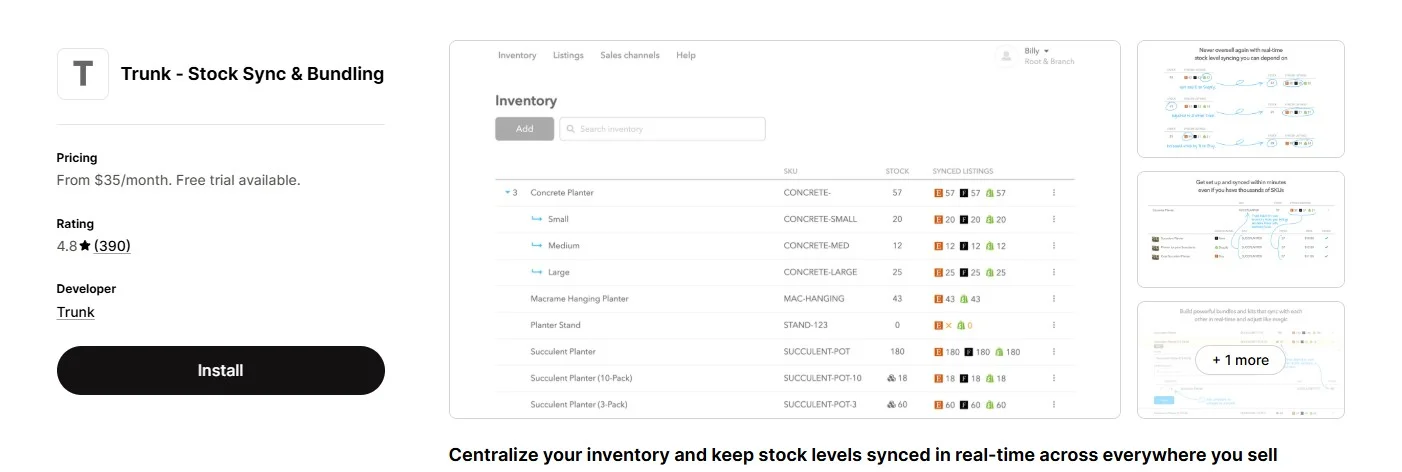
Rating: 4.8 / 5 Free plan: Yes (limited) From: $35 / month Best for: Merchants selling bundles, kits, or linked variants
Trunk solves a specific problem. When you sell a product as a standalone item and also as part of a bundle, your stock counts can go wrong fast. Trunk links those inventory levels together and updates them in real time whenever a sale happens.
It also syncs across multiple channels, so if you sell on Etsy or Amazon in addition to Shopify, your bundle stock stays accurate everywhere.
Key features:
- Real-time bundle and kit inventory sync
- Multi-channel sync across Shopify, Etsy, Amazon, and eBay
- Linked variant management
- Automatic stock deduction on every sale
- Clear dashboard showing all linked products and their stock
6. Katana — Best for Manufacturers and Makers
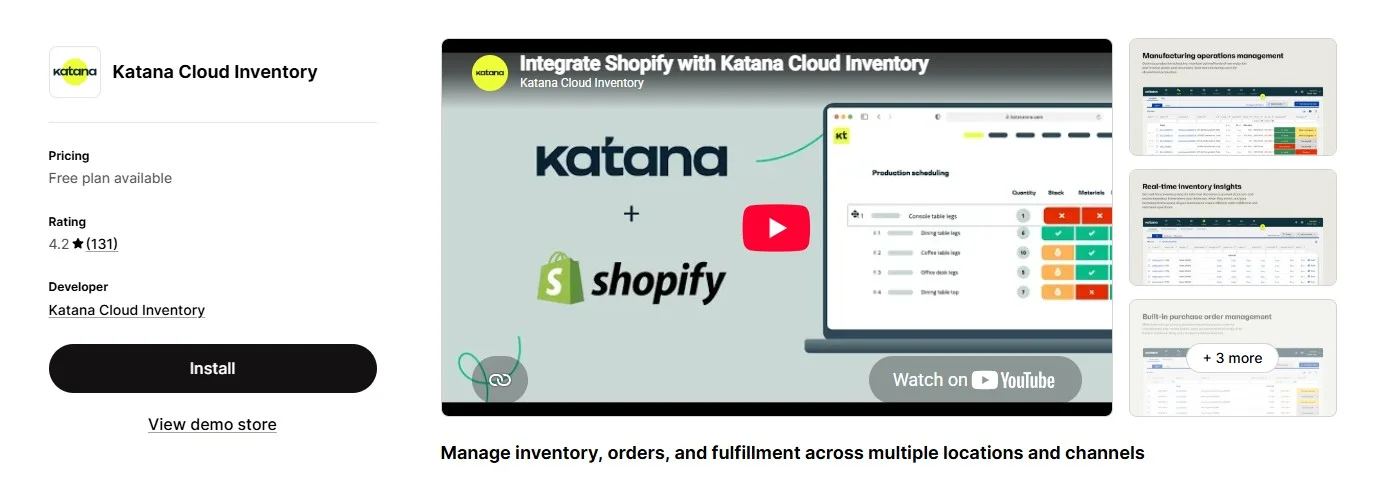
Rating: 4.7 / 5 Free plan: No (free trial) From: $199 / month Best for: Shopify stores that manufacture their own products
Katana is built for merchants who make what they sell. It tracks raw materials, manages bills of materials (BOM), and schedules production runs. When a Shopify order comes in, Katana shows you immediately whether you have the materials to fulfill it.
It is not a simple stock tracker. It is a production management tool that happens to connect to Shopify. The learning curve reflects that.
Key features:
- Bill of materials (BOM) management for every product
- Production scheduling and shop floor tracking
- Raw material and finished goods inventory
- Purchase order automation for materials
- Multi-location manufacturing support
7. Inventory Planner by Sage — Best for High-Volume Forecasting
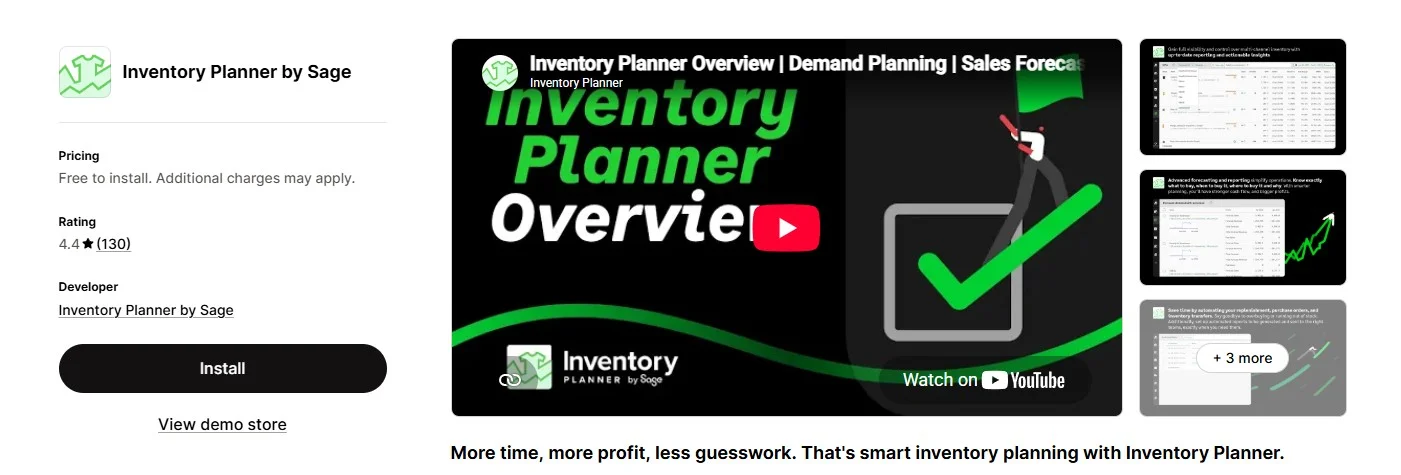
Rating: 4.6 / 5 Free plan: No (free trial) From: $245 / month Best for: Established stores with large catalogs and complex replenishment
Inventory Planner connects to Shopify and your other sales channels, then analyzes historical sales data to project future demand. It tells you what to order, how much to order, and when to order it, across every location.
The price is a barrier for smaller stores. But for high-volume operations where a single stockout or overstock costs thousands, the forecasting accuracy pays for itself.
Key features:
- Multi-channel demand forecasting
- Replenishment recommendations by location and channel
- Purchase order creation and tracking
- Overstock and understock analysis
- Shopify Plus compatible
8. SKULabs — Best for Warehouse and Barcode Management
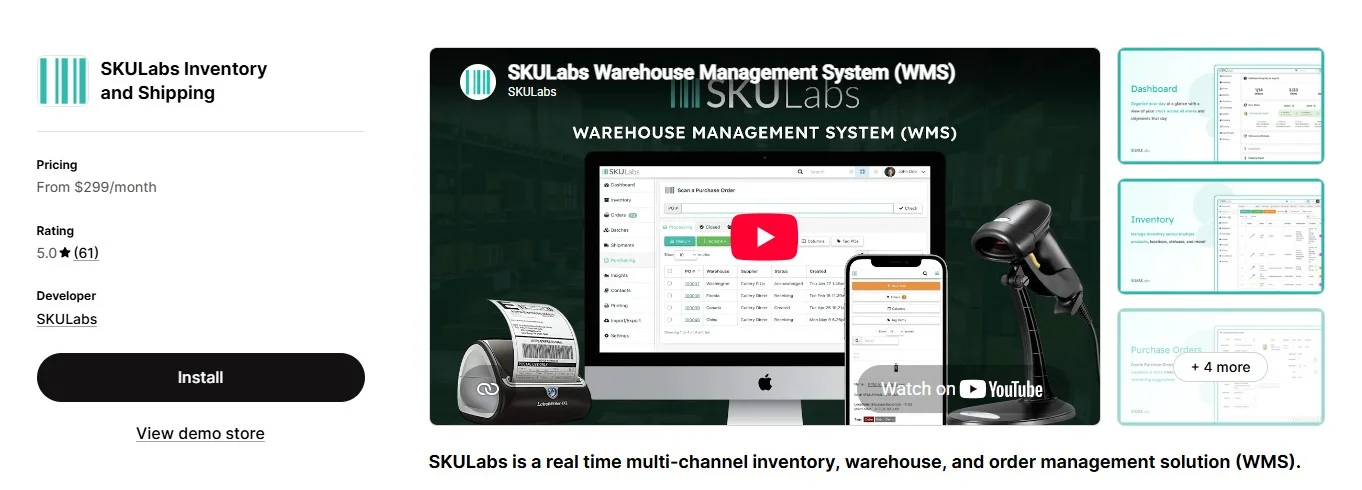
Rating: 4.8 / 5 Free plan: No (free trial) From: $299 / month Best for: Teams picking and packing in a physical warehouse
SKULabs is a warehouse management system built to connect with Shopify. It uses barcode scanning to guide pick and pack operations, reduce fulfillment errors, and track inventory across multiple warehouse locations.
It is built for teams, not solo operators. If you run a warehouse with multiple staff members, SKULabs reduces picking mistakes and speeds up fulfillment significantly.
Key features:
- Barcode scanning for pick, pack, and receive workflows
- Multi-warehouse inventory tracking
- Batch and wave picking
- Cycle count management
- Shipping integration with major carriers
9. Cin7 Core — Best for Enterprise Multi-Channel Retail
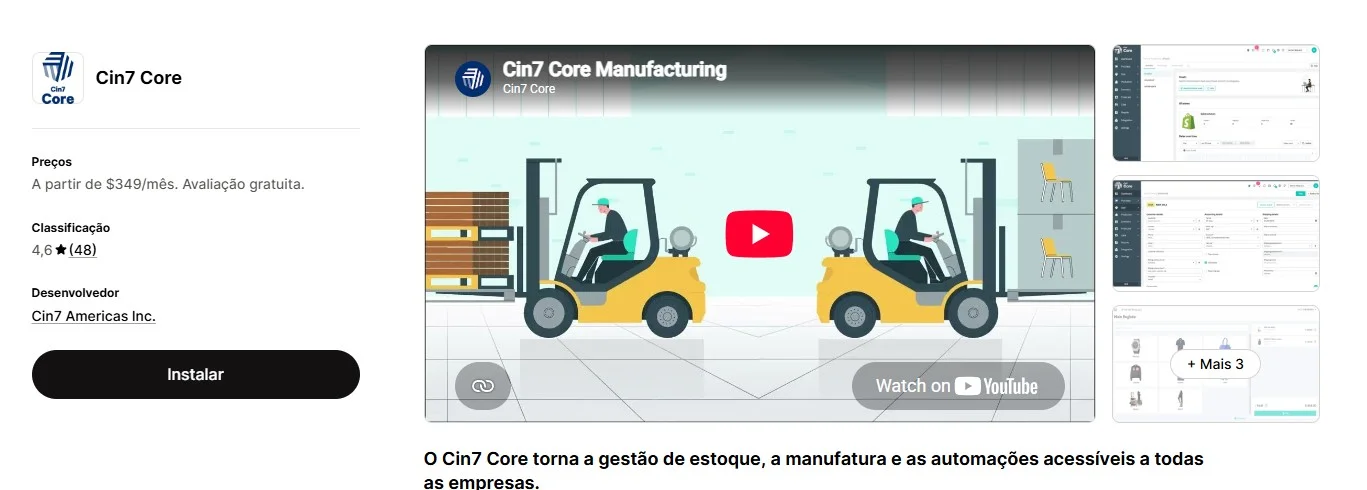
Rating: 4.3 / 5 Free plan: No (free trial) From: $349 / month Best for: Growing brands managing retail, wholesale, and ecommerce together
Cin7 Core, formerly known as DEAR Systems, connects Shopify with retail POS, wholesale channels, 3PLs, and over 700 integrations. It functions as a lightweight ERP for brands that have outgrown standard inventory tools.
The lower Shopify App Store rating reflects the setup complexity. Cin7 takes time to configure correctly. For the right use case, that investment pays off.
Key features:
- 700+ app and channel integrations
- Multi-channel sync across retail, wholesale, and ecommerce
- B2B portal for trade and wholesale orders
- Purchase orders and supplier management
- Advanced reporting and cost-of-goods tracking
10. Linnworks — Best for Large-Scale Multi-Channel Operations
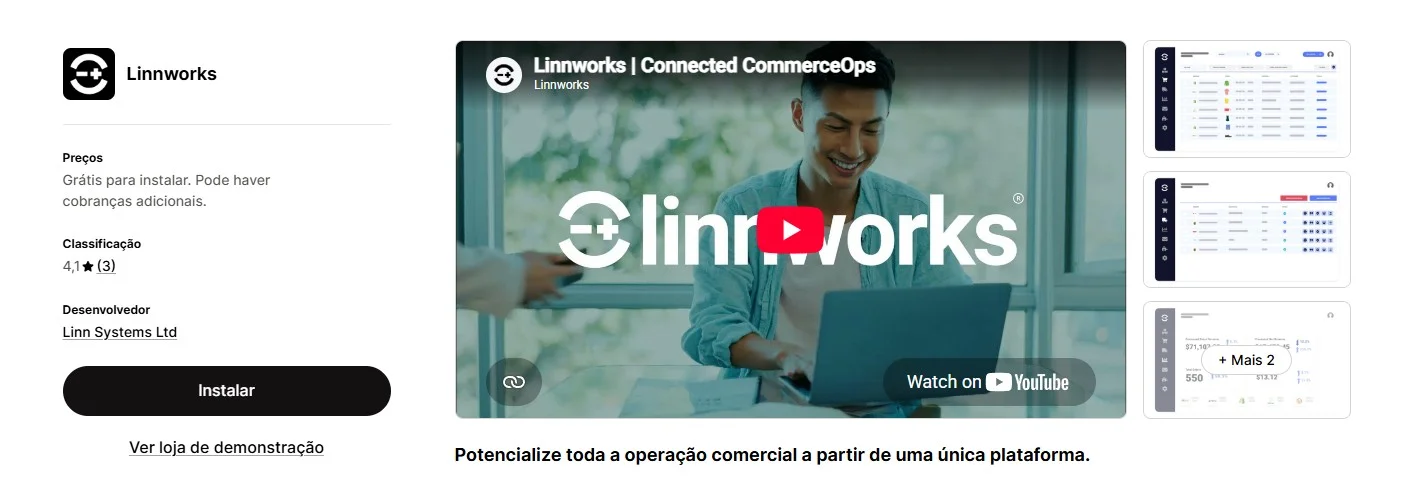
Rating: 4.2 / 5 Free plan: No From: $449 / month Best for: Enterprise sellers managing inventory across 60+ channels
Linnworks is built for volume. It connects Shopify with Amazon, eBay, Walmart, and over 65 other channels. It handles inventory, order routing, warehouse management, and listing updates across all of them from one dashboard.
The price and the setup time reflect the enterprise audience it is designed for. For large operations managing serious multi-channel volume, Linnworks removes a lot of manual coordination.
Key features:
- 67+ channel integrations, including Shopify, Amazon, eBay, and Walmart
- Centralized inventory and order management
- Automated order routing rules
- Warehouse management with picking workflows
- Cross-channel reporting and analytics
How to Choose the Right Inventory Sync App for Your Shopify Store
The right app depends on your store's situation, not on a generic ranking. Use this decision guide:
- Single Shopify store, spreadsheet workflow: FlexSync
- Dropshipping from suppliers with product feeds: syncX Stock Sync
- Selling on Amazon, Etsy, or eBay alongside Shopify: Sumtracker or Trunk
- Making your own products from raw materials: Katana
- Need accurate demand forecasting for reorders: Prediko, Inventory Planner by Sage, or Forthcast inventory forecasting
- Running a physical warehouse with a picking team: SKULabs
- Managing retail, wholesale, and ecommerce together: Cin7 Core
- Enterprise seller, 10+ sales channels: Linnworks
Forthcast helps Shopify merchants forecast demand, review reorder alerts and create draft purchase orders. It costs US$19.99/month with no per-SKU fees and includes a 14-day free trial.
If you are not sure where to start, FlexSync is the lowest-risk option. The free plan costs nothing. The Google Sheets workflow is something most merchants already understand. You can be set up in under ten minutes.
And for fashion merchants, the friction doesn't stop at inventory. When shoppers hesitate over which size to order, they don't always abandon immediately: many stall, second-guess, or leave "to think about it" and never come back. Meeting them with a quick, confident size recommendation at that exact moment removes the last bit of doubt standing between intent and purchase.
What About Pre-Orders When Stock Runs Out?
Inventory syncing keeps your stock counts accurate — but when a product does sell out, you don't have to stop selling. A Shopify pre-order app like K1 PreOrder Now & Deposit turns the out-of-stock state into a "Pre-order now" button, with deposits and split payments to lower the barrier for customers. Demand keeps converting while your inventory catches up — and because pre-orders are tagged separately, your stock counts and sync workflows stay clean.
Frequently Asked Questions
Is there a free inventory management app for Shopify?
Yes. FlexSync has a free plan that covers the core sync workflow with no time limit. syncX Stock Sync and Trunk also offer free tiers with limited features. Most other apps on this list offer free trials of 14 days rather than an ongoing free plan.
What happened to Stocky by Shopify?
Shopify removed Stocky from the App Store in February 2026 and fully shut it down in August 2026. Merchants who used Stocky for purchase orders and reorder suggestions need a replacement. Prediko, Sumtracker, and FlexSync are all strong alternatives depending on your workflow.
Can I manage inventory across multiple Shopify stores?
Yes. Several apps on this list support multi-store setups. FlexSync, Sumtracker, and Trunk all handle cross-store inventory scenarios. Linnworks and Cin7 Core cover this at the enterprise level.
Do I need a paid plan to get real-time inventory sync?
Not always. FlexSync and Trunk offer real-time sync on their free tiers. syncX Stock Sync updates on a schedule rather than in real time at the free tier. Check each app's specific plan details before assuming the free option covers what you need.
Which inventory app is best for a Shopify store that also sells on Amazon?
Sumtracker is the strongest option here. It syncs stock in real time across Shopify and Amazon, handles bundle inventory, and generates replenishment alerts when stock runs low across any channel. Linnworks is the better choice if you sell on Amazon plus five or more other channels.
How do bundle tracking and inventory sync work together?
Most standard stock sync apps do not handle bundles well. When a bundle sells, they often only update the bundle's own stock count and miss the individual component levels. Trunk is built specifically to solve this. It links bundle and component stock together and keeps both accurate on every sale. Sumtracker also handles bundle tracking if you need multi-channel sync alongside it.
What is the difference between inventory management and inventory sync?
Inventory management covers the full picture: tracking stock levels, forecasting demand, creating purchase orders, and managing suppliers. Inventory sync is a specific part of that: keeping stock counts accurate across multiple stores, warehouses, or sales channels in real time. Some apps do both. Others specialize in one. The right choice depends on which problem is more urgent for your store.
Conclusion
The best inventory management and sync apps for Shopify in 2026 range from free spreadsheet tools to enterprise multi-channel platforms. There is no single right answer for every store.
What matters is matching the tool to the problem. A solo merchant managing a spreadsheet-driven catalog does not need the same app as an enterprise seller running inventory across 20 channels.
If spreadsheet-based stock syncing is your workflow, FlexSync is a solid place to start — it's free and connects to Google Sheets without any technical setup.
For multi-channel sellers, manufacturers, or enterprise operations, the specialist tools in this list each solve their specific problem well. Use the comparison table and decision guide above to find the right fit — the best app is the one that matches how your team actually manages inventory.